
For practices
Elite Diagnostics.Simplified.
We partner with concierge practices to deliver advanced diagnostics, so you stay differentiated and ahead of the curve.
The gap
Offer what your patients want.
They ask about VO2 and metabolic testing. We provide the lab and PhD-led team. You refer, we test, and you stay fully informed on every data point.
What we test
Every protocol customized.
You tell us what matters for your patients and we build around it. Our testing menu:
Movement and musculoskeletal.
Identify dysfunction, reduce injury risk, and build performance plans your patients can trust.
Balance and stability
Center of pressure mapping under single-leg and dual-task conditions. Quantifies postural sway, weight distribution asymmetries, and stabilization strategies. Flags fall risk and vestibular compensation patterns before they become clinical problems.
3D motion capture
Markerless motion capture measuring joint angles, segmental alignment, and movement quality across multiple planes. Produces a full biomechanical profile: thoracic rotation, hip mobility, ankle dorsiflexion, and scapular mechanics. Gives you objective data on movement restrictions your patients can’t yet feel.
Gait analysis
Step-by-step breakdown of walking and running mechanics. Cadence, ground contact time, stride symmetry, vertical oscillation, and impact loading rates. Identifies compensatory patterns, overstriding, and asymmetries that correlate with overuse injury.
Posture assessment
Static and dynamic postural screening. Quantifies forward head position, pelvic tilt, shoulder elevation asymmetry, and spinal curvature deviations. Baseline data for tracking structural changes over time.
Metabolic profiling.
Precise physiological data that replaces guesswork on training intensity, nutrition targets, and disease risk.
VO2
Graded exercise test measuring peak oxygen uptake, ventilatory thresholds, and oxygen pulse. The single strongest predictor of all-cause mortality. Produces precise aerobic capacity numbers your patient can train against, not estimates from a watch.
Fat oxidation (Fat Max)
Identifies the exact heart rate and intensity where your patient oxidizes the most fat per minute. Substrate utilization data across the full intensity spectrum. Critical for patients with metabolic health goals, body composition targets, or endurance training plans.
Thresholds and training zones
Derived from ventilatory threshold data, not age-based formulas. Individualized training zones with specific heart rate and power outputs for recovery, endurance, tempo, threshold, and VO2 efforts. Every workout gets a target and is based on measured physiology.
Hydration and sweat testing
Real-time analysis of sweat rate and electrolyte loss to determine hydration needs during exercise. Personalized fluid replacement strategies to optimize performance, reduce cramping, and maximize recovery.
Body composition
Distinguishing between fat mass and lean mass, segmental distribution, and how much visceral fat surrounds abdominal organs. Supports personalized training and nutrition strategies while helping identify potential health risks.
Strength and power.
Quantify functional capacity, identify bilateral deficits, and establish strength baselines that matter for longevity.
Grip strength
One of the strongest independent predictors of all-cause mortality and functional capacity in aging populations. Measured bilaterally with comparison to normative age and gender data. Simple test, significant clinical signal.
Lower body power
Force plate testing measuring peak force production, rate of force development, and jump height. Quantifies explosive capacity and neuromuscular efficiency. Tracks decline or improvement in the single most important physical quality for aging well.
Bilateral symmetry
Side-to-side comparison across force production, absorption, and jump metrics. Identifies asymmetries greater than 10–15% that correlate with elevated injury risk. Gives you a concrete rehab, prehab, or optimization target.
Agility and reactive ability
Timed reactive movement testing measuring neuromuscular coordination, change-of-direction speed, and cognitive-motor coupling. Relevant for patients who play sports, but also a proxy for nervous system health and processing speed.
Full body strength and power
Isometric strength testing across major muscle groups measuring peak force production and bilateral comparison. Identifies relative weaknesses, force output asymmetries, and deficits correlated with injury risk and functional decline.
How it works.
You refer
Send us your patient with clinical context and any specific testing priorities.
Customize diagnostics
We build the protocol around your patient’s goals and your clinical needs.
We test
We conduct the battery of diagnostics at one of our labs.
We interpret
Our performance scientists review every result and coordinate with your team to ensure complete understanding of the data.
You get full access
Every result, every metric, every trend. Visible in our digital portal the moment it’s ready.
Patients retest
We bring patients back to track the metrics that matter most. You see changes over time.


Partnership
Your patients stay yours.
We act as an extension of your practice — no contracts, no revenue share, no competition — just deeper data, full clinical ownership, and patients who return to you with clearer insights and stronger outcomes.
What your practice gets.
Total clinical visibility
Full access to every patient’s data, trends, reports, and wearable integration (Whoop, Oura, etc.) in one unified dashboard.
Customized testing power
Testing protocols tailored to your clinical priorities, with advanced capabilities that would cost six figures to build in-house.
Priority partner access
“In-network” partner status with priority scheduling, seamless coordination, and lab data management handled for you.

Built for practices like yours
Our partners send us their most demanding patients — because they know the data will be precise and the experience will reflect well on their practice.
“My patients come back with data I can act on. Different Health has become a core part of how I practice.”
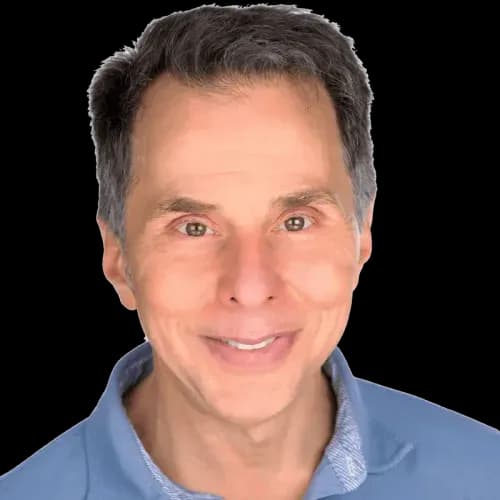
Dr. Ronald Primas
Renowned Longevity Doctor